

The field of 3D modeling is undergoing a radical shift. Traditionally, building 3D assets required specialized skills, manual design, and time-consuming workflows. But with the emergence of text-to-3D AI technology, creators can now generate complex, printable 3D models simply by describing what they want in natural language. This guide dives deep into the world of AI 3D generation, unpacking its core technologies, real-world applications, and the transformative power it brings to developers, designers, and 3D artists.
What Is Text-to-3D? The Basics of AI 3D Model Generation

Text-to-3D refers to the process where artificial intelligence converts a written prompt—like "a futuristic racing car" or "a medieval castle"—into a 3D model. This is achieved through advanced machine learning models capable of understanding language and synthesizing 3D geometry, textures, and sometimes even animations from that description. The result is a digital asset ready for further editing, visualization, or even 3D printing. This technology is democratizing 3D model creation, enabling both professionals and hobbyists to move from imaginative ideas to tangible objects rapidly [1][4].
While early attempts at automated 3D generation offered only basic shapes or required extensive post-processing, modern AI 3D model generators—powered by advances in neural networks and generative models—can now produce complex, customizable, and printable assets in minutes [1][3]. Platforms like TimrX, which offer browser-based workflows, further lower the barrier to entry, allowing anyone to generate, refine, and export 3D models directly from their web browser.
How Text-to-3D AI Generates 3D Models from Natural Language Prompts
The core of text-to-3D AI generation is a pipeline that interprets user input and synthesizes a 3D representation. Here’s a step-by-step breakdown of a typical process:
- Text Input: The user provides a prompt describing the desired object (e.g., "a low-poly red sports car").
- Language Understanding: AI models (usually transformer-based, similar to those used in language models like GPT) parse the prompt to extract semantic meaning.
- Latent Space Mapping: The system maps the text semantics into a latent space—an abstract, high-dimensional representation that encodes object features.
- Geometry Generation: AI generates the 3D mesh, point cloud, or voxel representation based on latent features.
- Texture & Material Synthesis: Advanced systems apply generative texturing, creating surface detail and realistic materials from the prompt or derived context [2].
- Export & Post-processing: The model is exported in standard formats (e.g., OBJ, STL, GLB), optionally optimized for use in games, AR/VR, or 3D printing.
AI 3D model generators like TimrX streamline this process, providing creators with real-time feedback and editing capabilities. For example, TimrX’s AI 3D Generator allows users to experiment with different prompts, styles, and export options—all without complex installations or local GPU requirements.
Common Techniques for AI 3D Generation
Several AI techniques underpin text-to-3D model generation. Each has specific strengths and use cases:
Neural Radiance Fields (NeRF)
NeRFs are neural representations that encode the color and density of a 3D scene at every point in space. Originally developed for novel view synthesis from images, NeRFs have been adapted for generative tasks, enabling AI to 'hallucinate' 3D shapes from textual or image prompts [5]. They excel at photorealistic rendering and can interpolate complex surfaces, though direct mesh export is still an area of active research.
Diffusion-Based 3D Models
Diffusion models, which have revolutionized 2D image generation, are now being extended to 3D. These models iteratively refine a random noise field into a coherent 3D object, guided by the text prompt. Diffusion-based approaches can create highly varied and detailed objects and are often used in tandem with mesh or voxel representations.
Mesh Generation and Text-to-Mesh
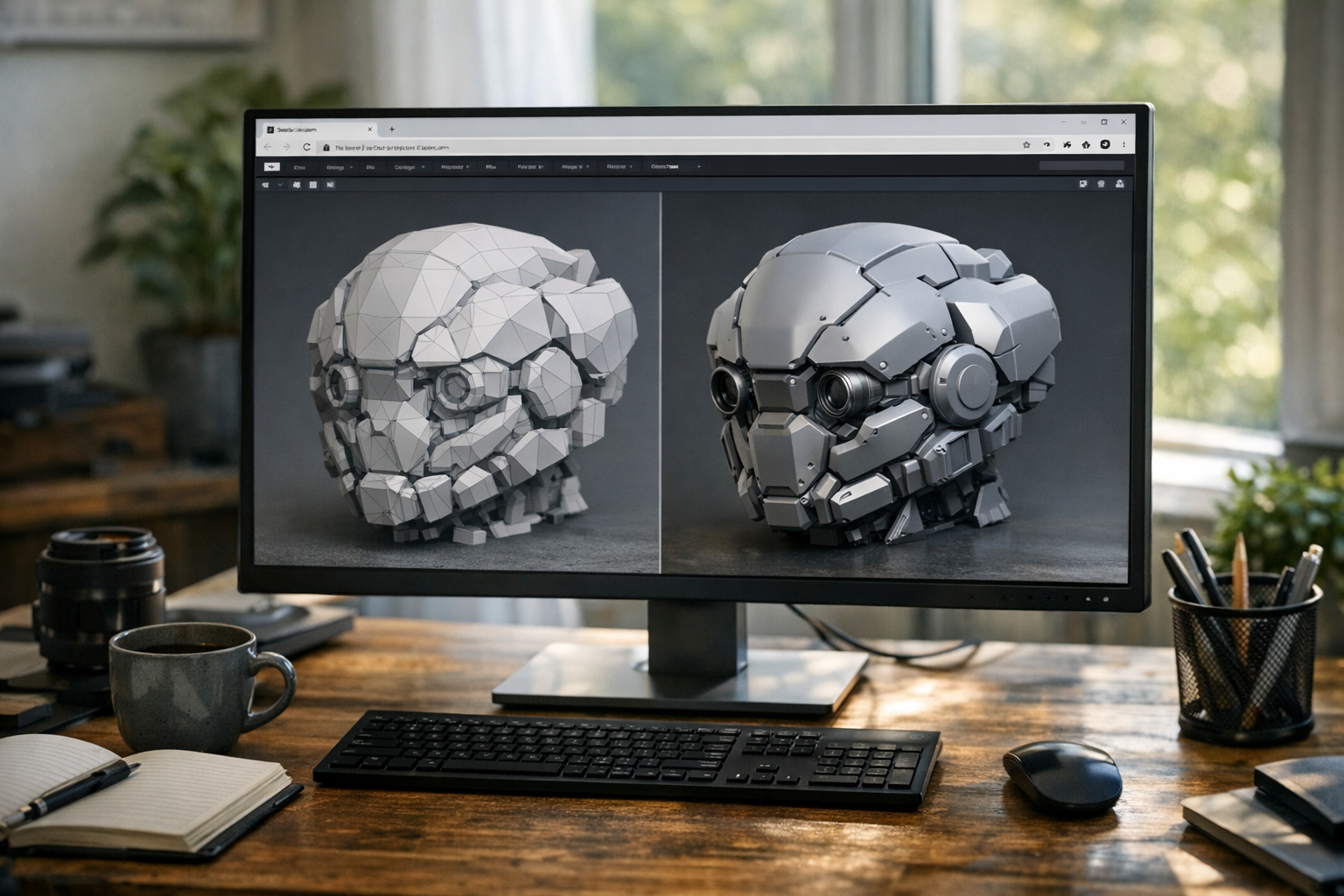
Text-to-mesh models generate polygonal meshes directly from language inputs. They may use a combination of deep learning and traditional graphics techniques to produce watertight, printable models. Some systems allow for further procedural editing or apply generative texturing to enhance realism [2].
Hybrid approaches are common, leveraging the strengths of multiple techniques for optimal results. For instance, a prompt might first generate a base mesh, which is then textured using a diffusion model, resulting in a visually rich and structurally sound asset.
Real-World Use Cases: Gaming, Prototyping, and Design
Text-to-3D AI is finding rapid adoption across industries. Here are some prominent use cases:
- Game Development: AI-generated 3D assets accelerate world-building and prototyping, allowing game designers to iterate on environments, props, and characters with unprecedented speed [6].
- Product Design: Designers can visualize concepts as tangible 3D models early in the creative process, reducing time to market and enabling rapid iteration [6].
- Education & Training: Instructors can create custom 3D teaching aids, simulations, and visualizations tailored to lesson plans.
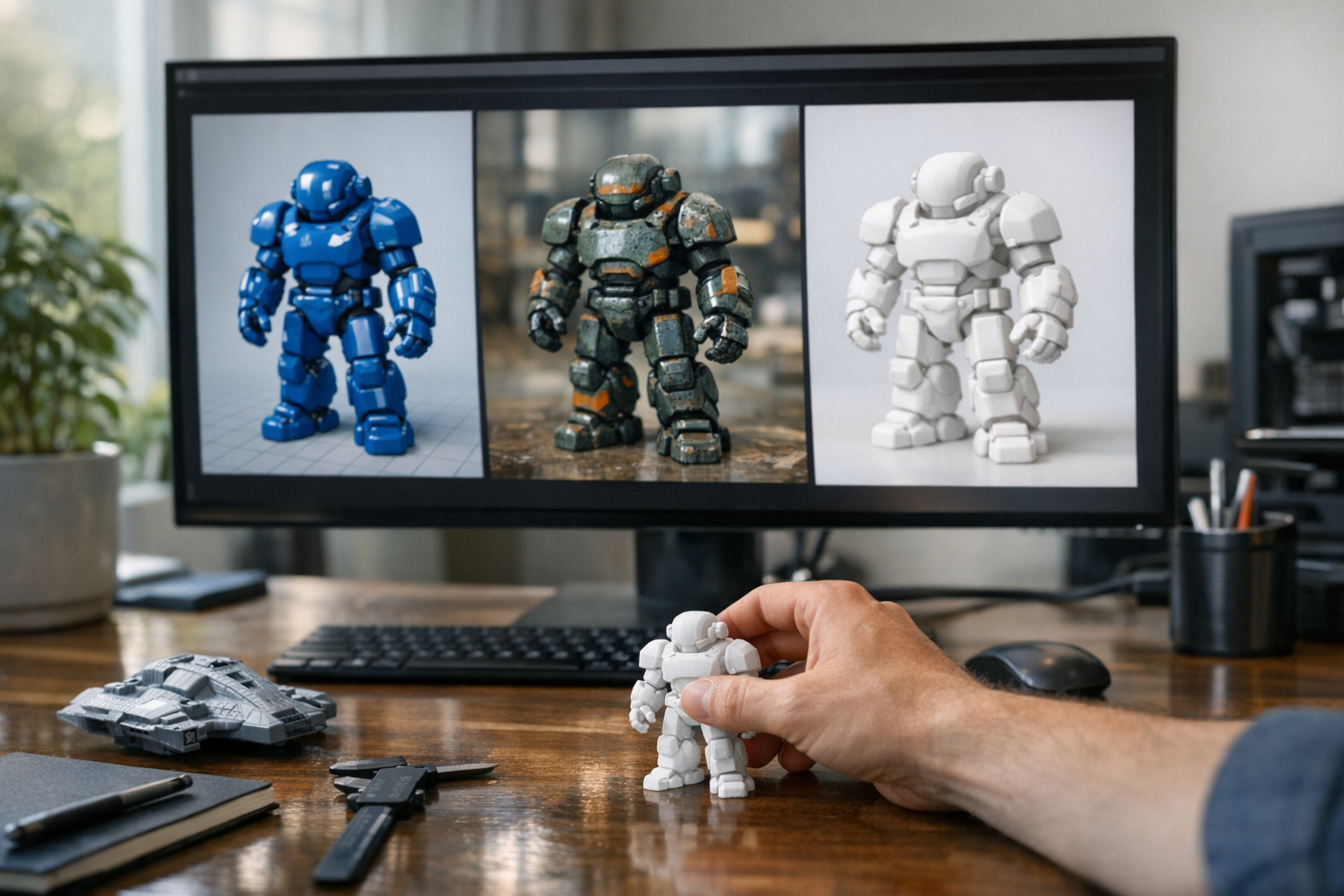
- 3D Printing: Artists and engineers can move from idea to physical object in hours, using AI to generate and optimize printable models [1].
- Virtual & Augmented Reality: Fast generation of unique assets supports immersive experiences and rapid prototyping for AR/VR applications.
According to industry reports, even non-technical users are leveraging AI 3D model generators to create personalized designs, collectibles, and prototypes. This democratization of 3D content creation is changing the landscape of digital art, product development, and education [1][3][6].
Challenges in AI-Generated 3D Models: Topology, Geometry, and Printability
Despite rapid progress, text-to-3D technology faces notable challenges. The main issues revolve around the quality and usability of the generated geometry:
- Topology: Ensuring that generated meshes are watertight (no holes) and free from self-intersections is critical for both digital and printable assets.
- Geometry Complexity: Some AI models produce overly dense or noisy meshes, which may be difficult to edit or render efficiently.
- Texture Mapping: Accurately applying textures to complex geometry remains a challenge, especially for organic or intricate shapes [2].
- Physical Constraints: For 3D printing, models must be manifold and respect the limitations of the target printing technology (e.g., minimum feature size, overhangs).
Recent advances in post-processing algorithms and integrated repair tools—often available within platforms like TimrX—help mitigate these issues. Users can preview, repair, and optimize models for printing or visualization directly within the browser.
TimrX: Browser-Based Text-to-3D and 3D Printing Workflows
TimrX stands out in the new generation of AI 3D model generators by offering a complete browser-based workflow. This means creators, developers, and 3D artists can go from text prompt to printable model without local software installation or expensive hardware. TimrX’s suite includes:
- AI 3D Generator: Generate 3D models from text prompts.
- Text-to-3D: Specialized interface for converting language inputs into 3D assets.
- Image-to-3D: Create 3D models from reference images.
- 3D Print Model Generator: Optimize and export models specifically for 3D printing.
- 3D Printing: Integrated tools for slicing, previewing, and preparing files for common 3D printers.
The TimrX hub brings all these tools together in a unified, browser-native environment. Users can create, edit, preview, and export 3D assets in standard formats (STL, OBJ, GLB), ensuring compatibility with the vast majority of 3D printers and design pipelines.
For those interested in the broader context of AI-powered creativity, our article What Is AI Image Generation? A Practical Guide for Creators and Developers discusses how similar principles are transforming 2D media as well.
Conclusion: The Future of AI 3D Model Generation
Text-to-3D technology is rapidly moving from research labs to real-world creative workflows. By combining advances in neural networks, generative texturing, and browser-based platforms, AI is making 3D creation accessible to an ever-wider audience. While challenges in geometry and printability remain, integrated tools and continuous research are closing the gap between imagination and fabrication. Whether you’re designing the next blockbuster game, prototyping a product, or simply exploring digital art, AI-powered 3D model generators like TimrX are set to become indispensable tools in your creative arsenal.
FAQ: AI 3D Model Generation
- How accurate are AI-generated 3D models from text? Accuracy can vary based on the prompt and the underlying AI model. Modern systems deliver surprisingly detailed, usable results, but complex objects may require manual refinement [1][4].
- Can I 3D print models generated by AI? Yes, many AI 3D model generators, including TimrX, export models in printable formats like STL or OBJ. Be sure to check for printability and repair any geometry issues before printing [1].
- What file formats do AI 3D model generators support? Most tools support standard 3D formats such as OBJ, STL, and GLB, ensuring compatibility with design and printing workflows [1][3].
- Are browser-based tools like TimrX suitable for professional use? Yes. Browser-based platforms now offer robust features, including high-quality AI generation, editing, and export. They are suitable for both professionals and hobbyists.
Sources
- [1] From Imagination to 3D Reality: Creative Fabrica Studio AI ...
- [2] How AI Is Transforming 3D Modeling - Live Home 3D
- [3] 3D AI Studio - Generate 3D Models from Image or Text in Seconds
- [4] The breakthrough research behind Adobe Substance 3D Viewer's ...
- [5] From Text to 3D: A Beginner's Guide to AI-Powered 3D Model ...
Comments 0
Be the first to comment on this post.